Unified drone soccer

Everyone flies at the same height.

One league where Deaf, Hard of Hearing, disabled and mainstream students build, fly and compete on the same teams, in the same cages, for the same trophy.

Learn. Fly. Lead.

Building futures, one flight at a time.

SAP Consortium Air Drone Academy (SCADA) is a 501(c)(3) nonprofit organization in Michigan. We empower the next generation through drone education, hands-on training and real-world experiences that prepare students for high-demand careers in the aviation and aerospace industries.

We work with K–12 students, out-of-school youth and underserved learners, including students who are Deaf, Hard of Hearing or living with a disability, in partnership with schools, community organizations, industry and government.

Our mission

To impart critical STEM concepts to school-going and dropout students, empowering them to become certified air drone pilots and technical leaders in the aviation industry.

  • Hands-on learningStudents build, fly and repair real drones.
  • Technical skillsAssembly, programming, soldering and precision flight.
  • Leadership developmentEvery pilot takes a turn in every role on the team.
  • Workforce readinessFAA certification prep and real pathways into aviation.

What we do.

Inspiring students, strengthening communities and expanding the future of aviation.

  • K–12 drone education

    Structured UAS training for educators and students, aligned with STEM standards.

  • Certification and careers

    Preparing students for FAA Part 107 certification and career pathways in aviation and aerospace.

  • Community impact

    Engaging underserved and dropout students through accessible, hands-on STEM programs.

  • Drone entertainment

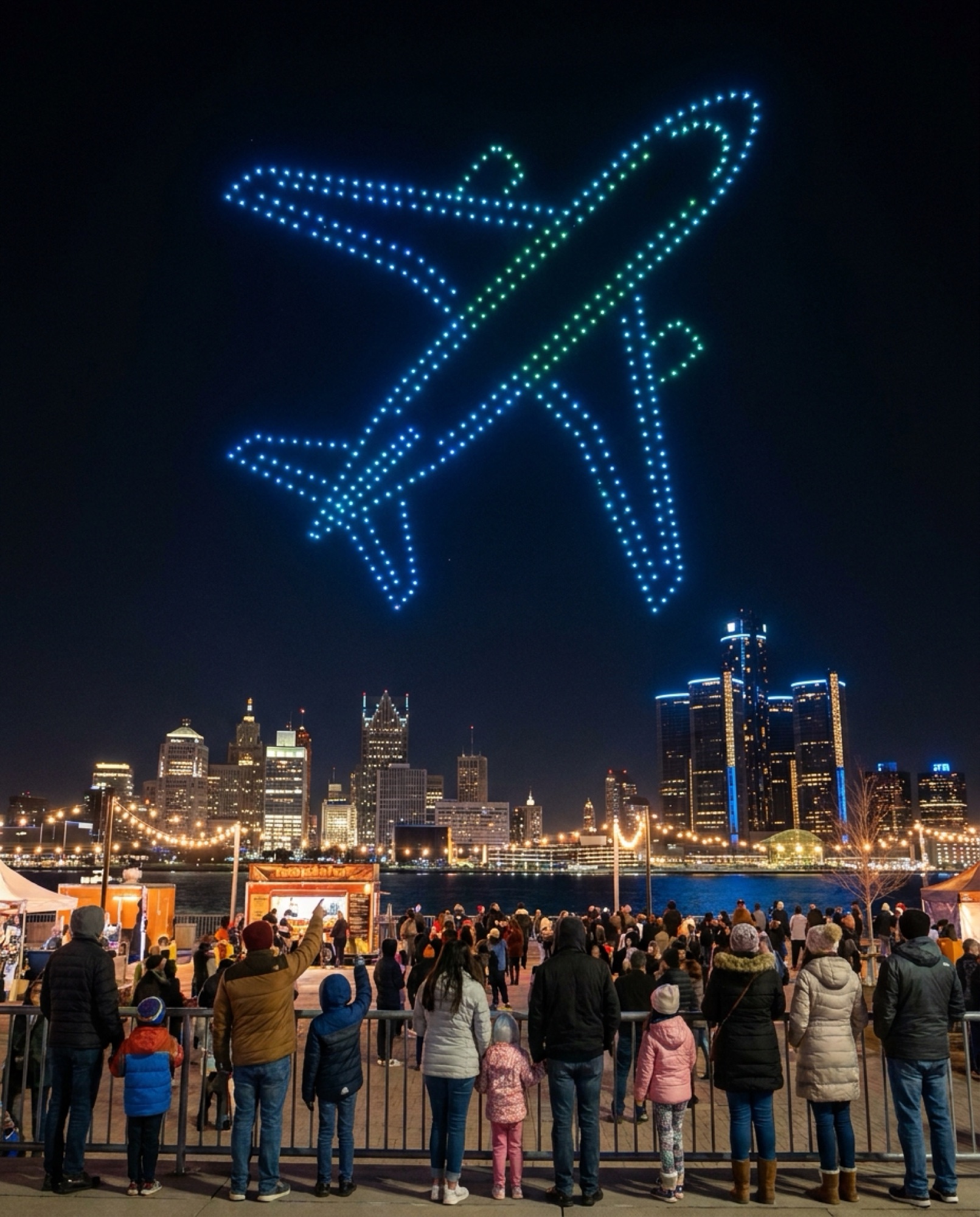
    Exciting drone shows and performances that educate, entertain and inspire the public.

Our programs.

From a teacher's first drone lesson to a festival crowd looking up, there's a way into flight for every age.

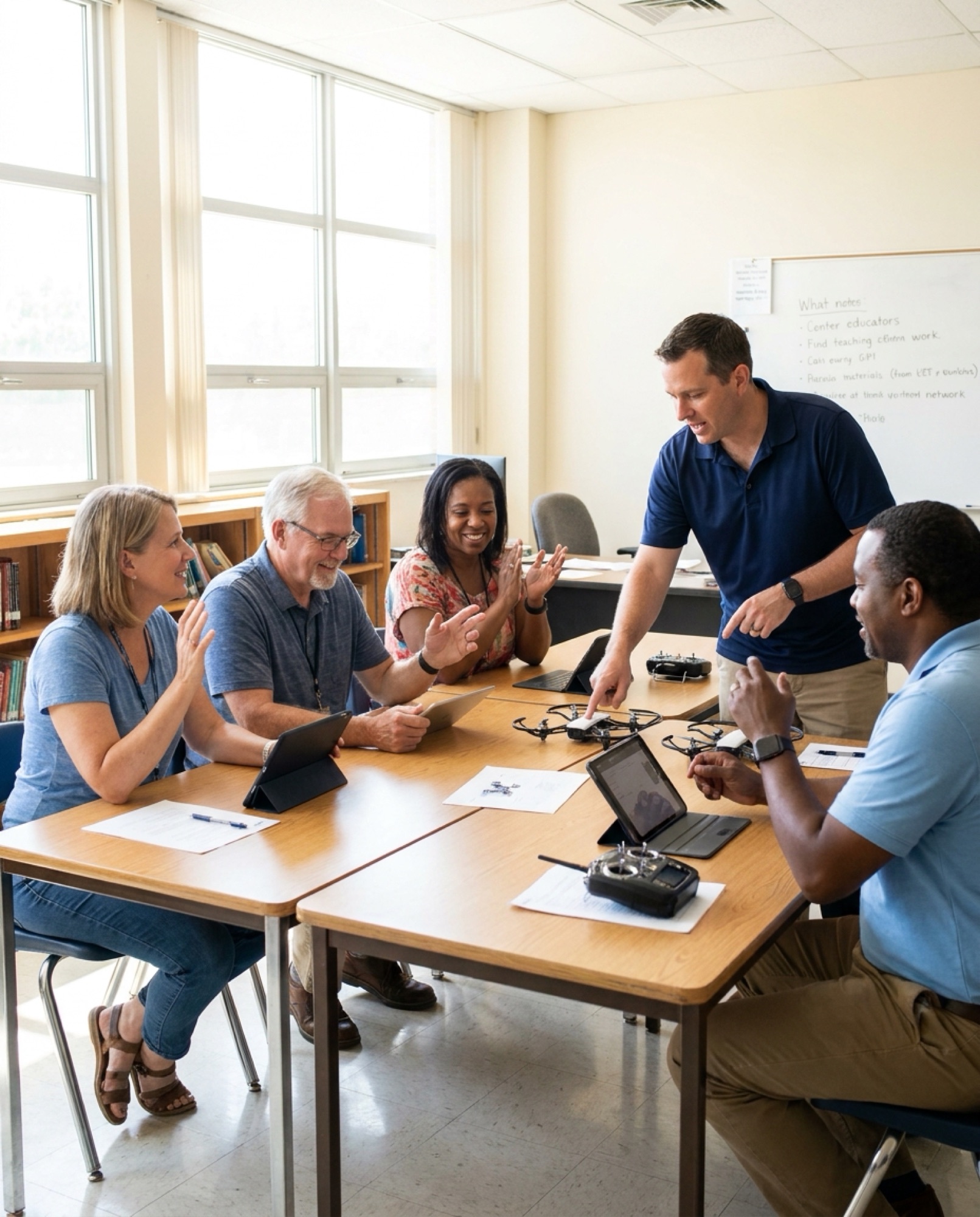
  • Teachers learning to program and fly small drones in a workshop

    Educator training

    Professional development for teachers to bring drone technology into the classroom.

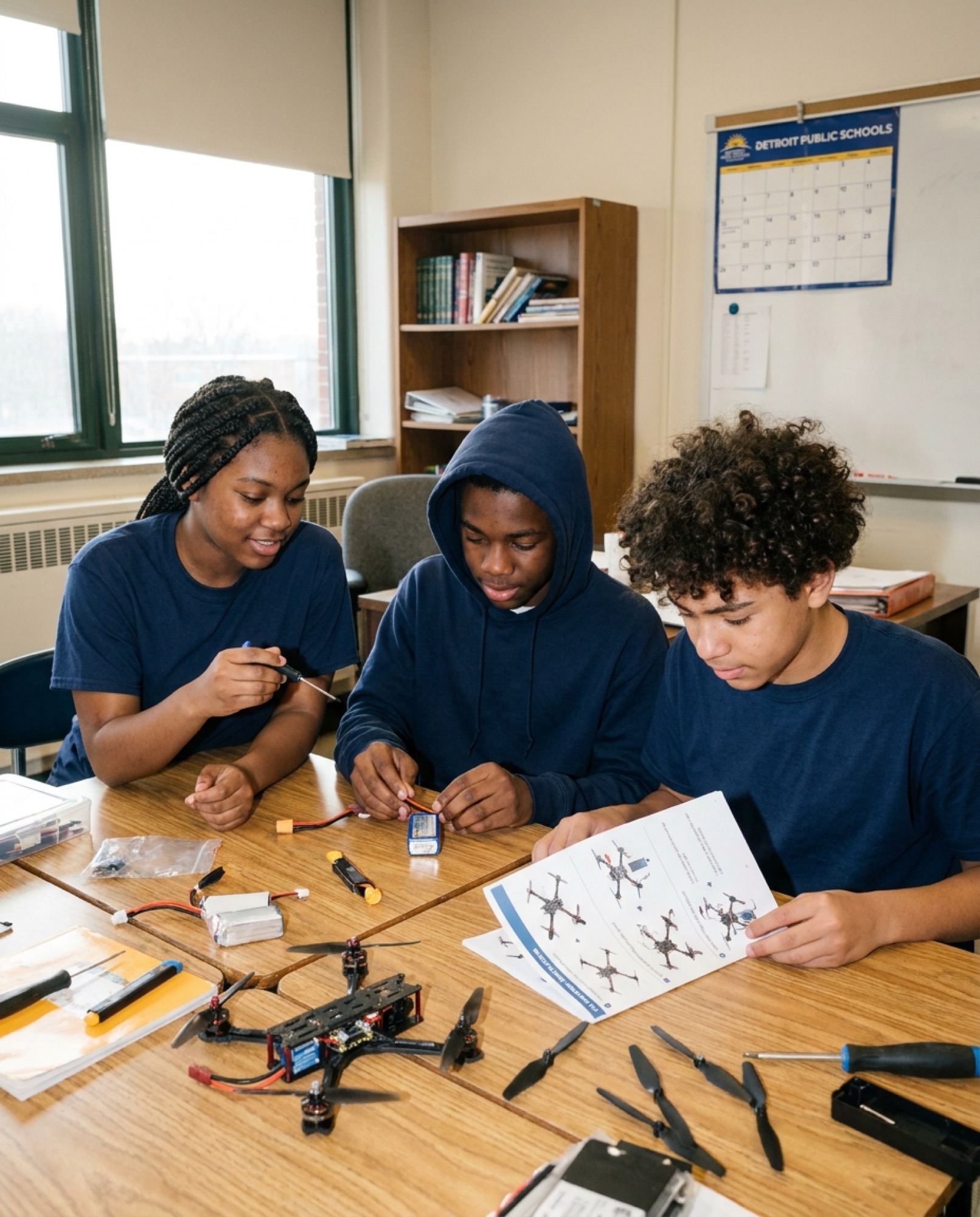
  • Students assembling a drone together at an after-school club

    STEM enrichment

    After-school and summer programs that spark curiosity and build confidence.

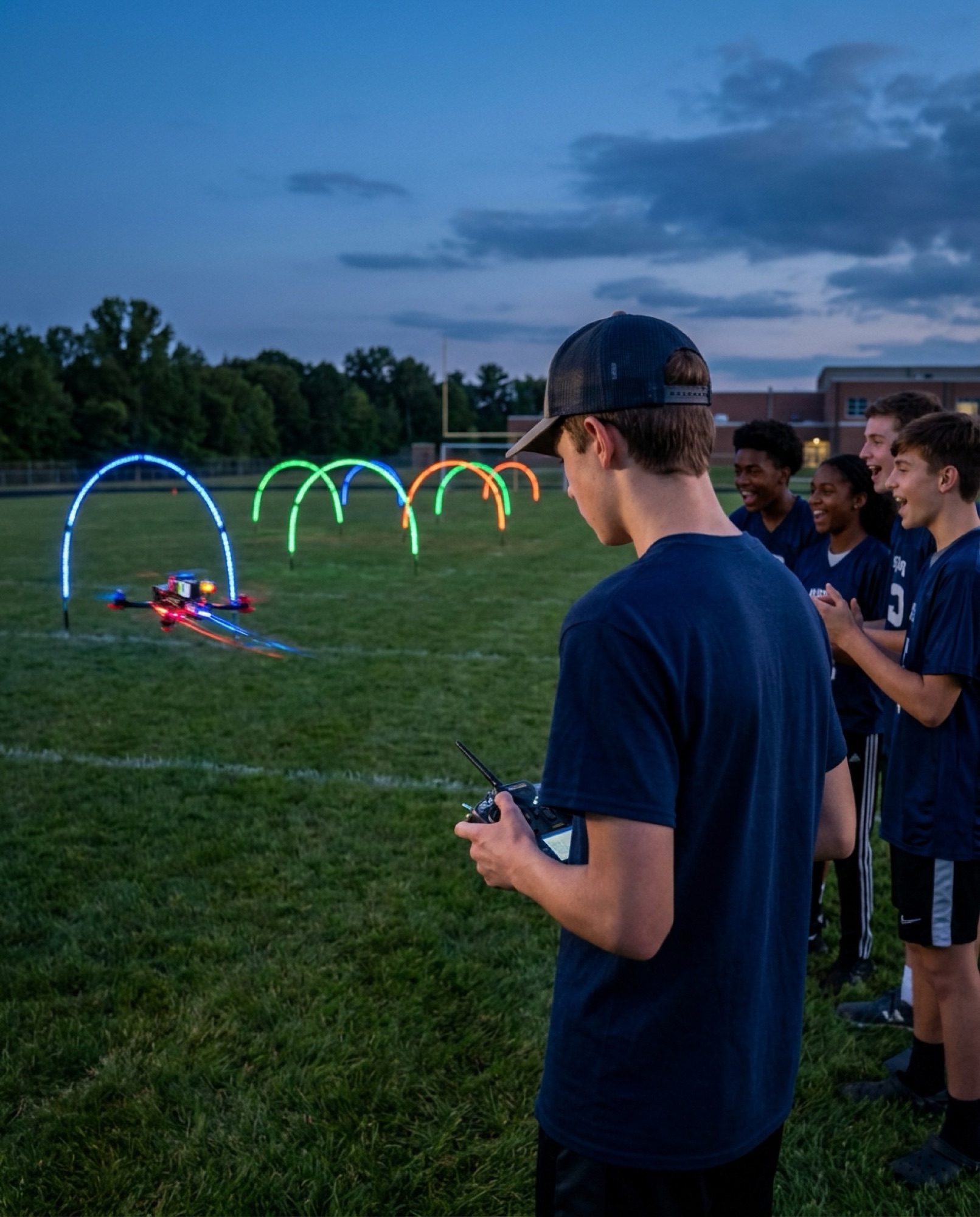
  • A student pilot racing a drone through glowing gates on a sports field at dusk

    Drone competitions

    Team-based challenges that build innovation, teamwork and real-world problem solving.

  • A drone light show over a crowd at a riverfront festival

    Drone entertainment

    Dynamic drone shows for community events, festivals and special celebrations.

How drone soccer works.

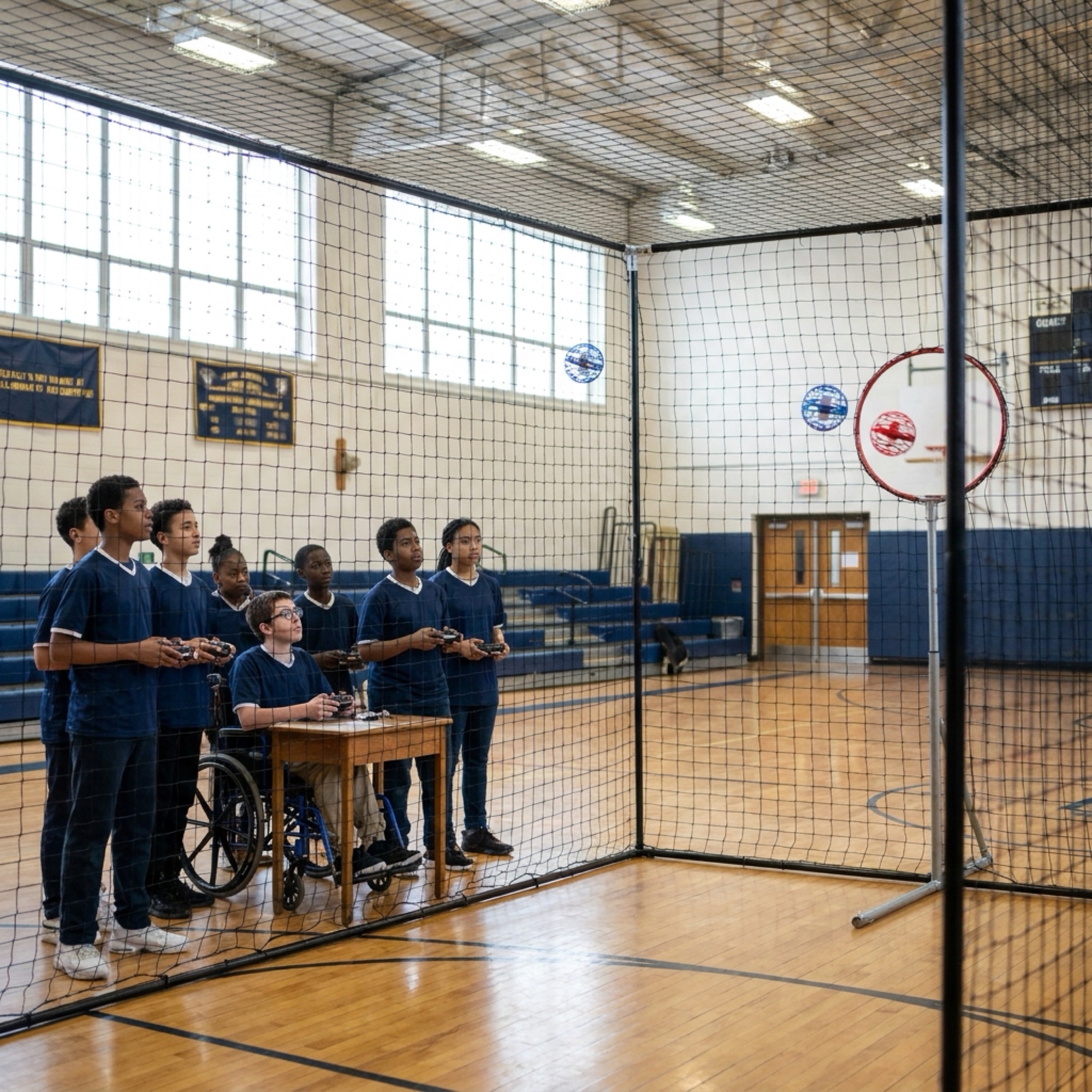
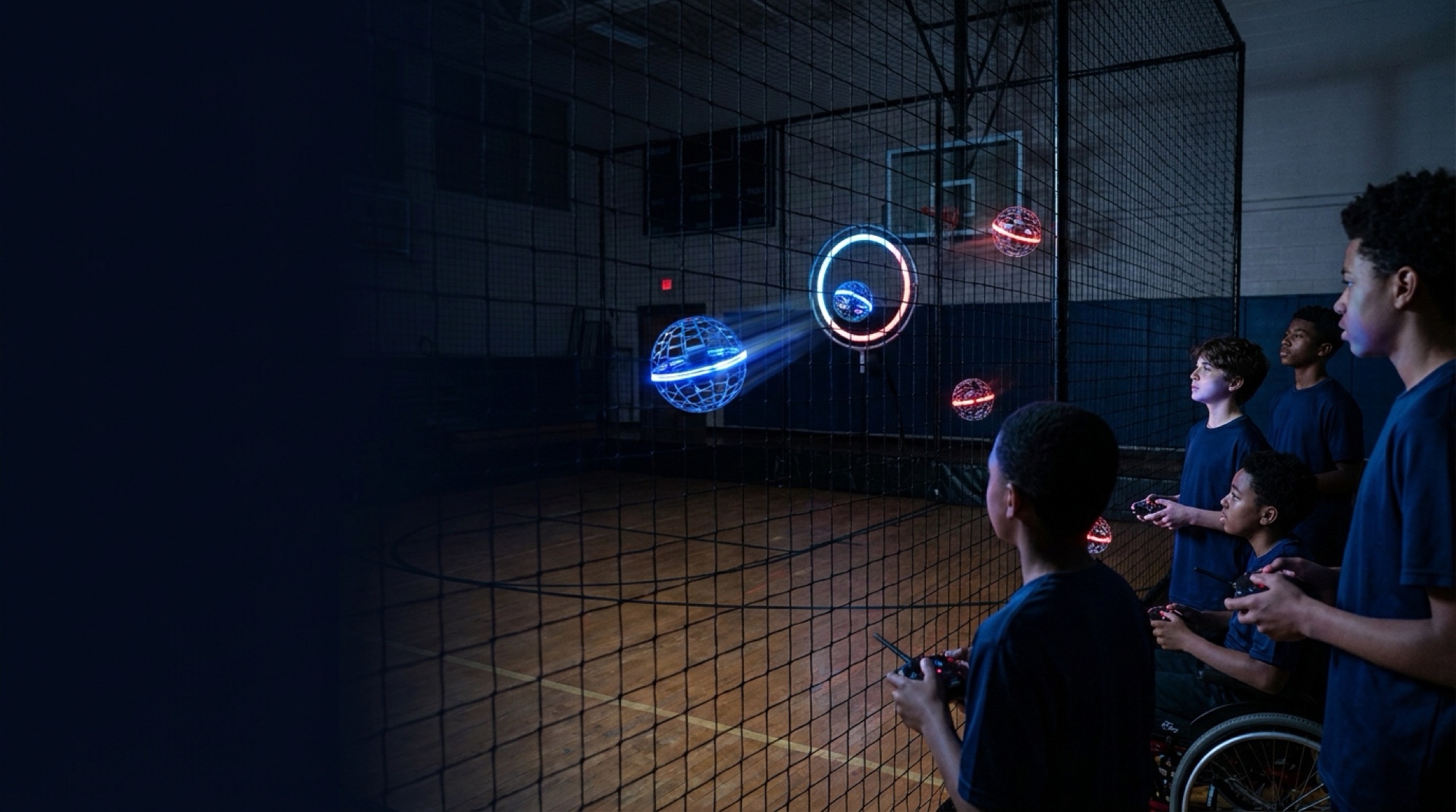
Drone soccer is a team sport played with drones. Two teams fly caged drones inside a netted arena. Each team's striker tries to fly through the other team's goal ring while teammates block and defend. This match is running live.

  • The ball is a drone

    Every pilot flies a small quadcopter inside a round protective shell.

  • Only the striker scores

    One pilot per team can score. The rest clear a path or guard their goal.

  • The goal ring

    A glowing hoop raised high at each end. Fly the striker through it to score.

  • Team lights

    LEDs show which team each drone is on, so pilots and fans follow the game by sight.

  • The cage

    Netting keeps drones in and people out. No one is ever in the line of play.

  • Pilots at the edge

    Pilots fly from outside the cage, standing or seated, with the same controls.

Built for every pilot from day one.

Most youth with disabilities are left out of team sports, and Deaf students are left out of most STEM coaching because it is delivered by voice. We don't run a regular league and an adaptive one. We run one league.

Here is how drone soccer removes the barriers of traditional sports, one by one.

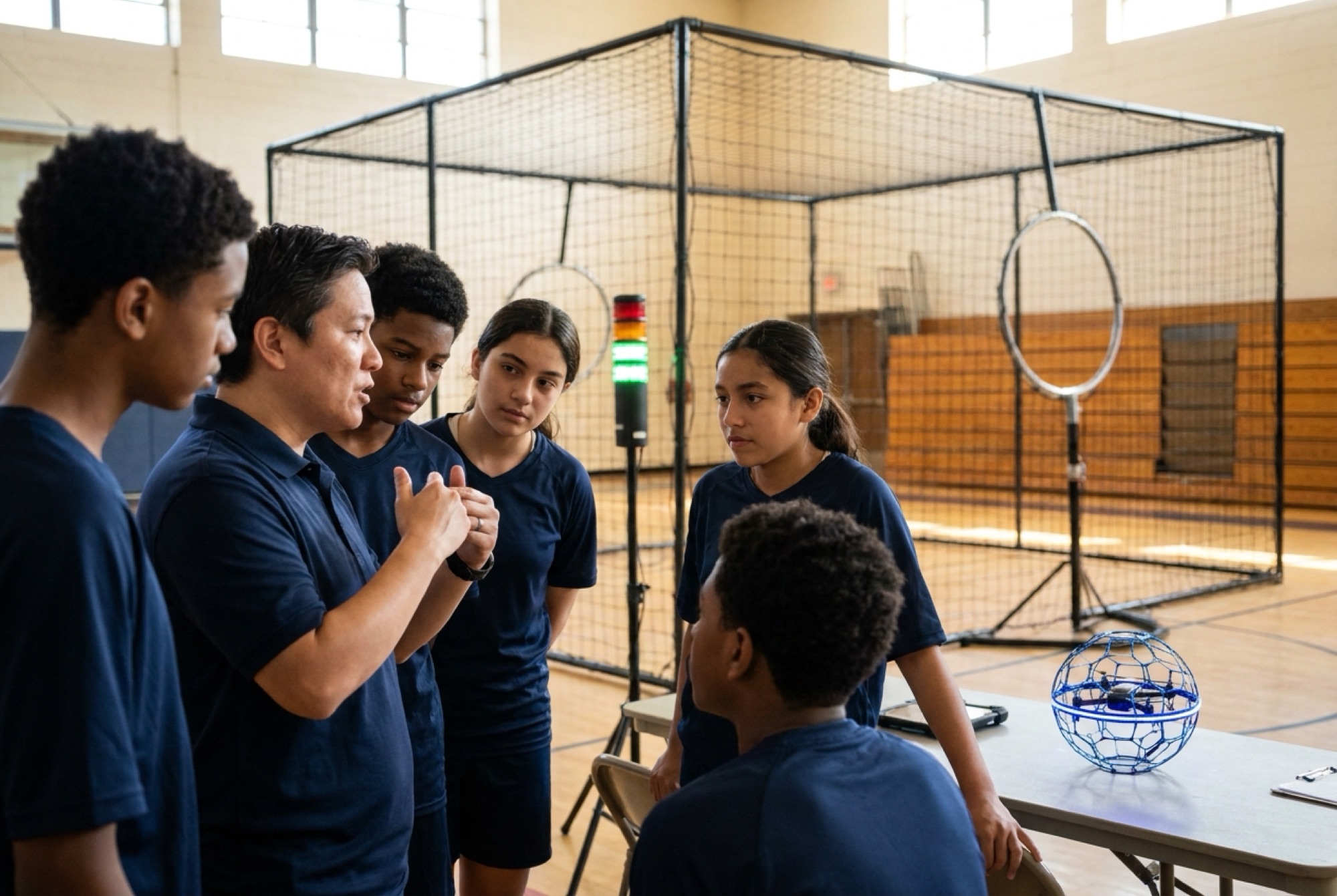
A coach talking with a group of student pilots beside a green tower light and the netted arena

Barrier in traditional sports: Can't hear the whistle

The game is visual.

LED goals, flags and lights replace whistles and shouting. A Deaf pilot is often the best striker on the team: sharp visual focus, and no crowd noise to pull attention away.

What SCADA adds

ASL coaches, vibrating wristbands, and a large TV scoreboard every pilot can read.
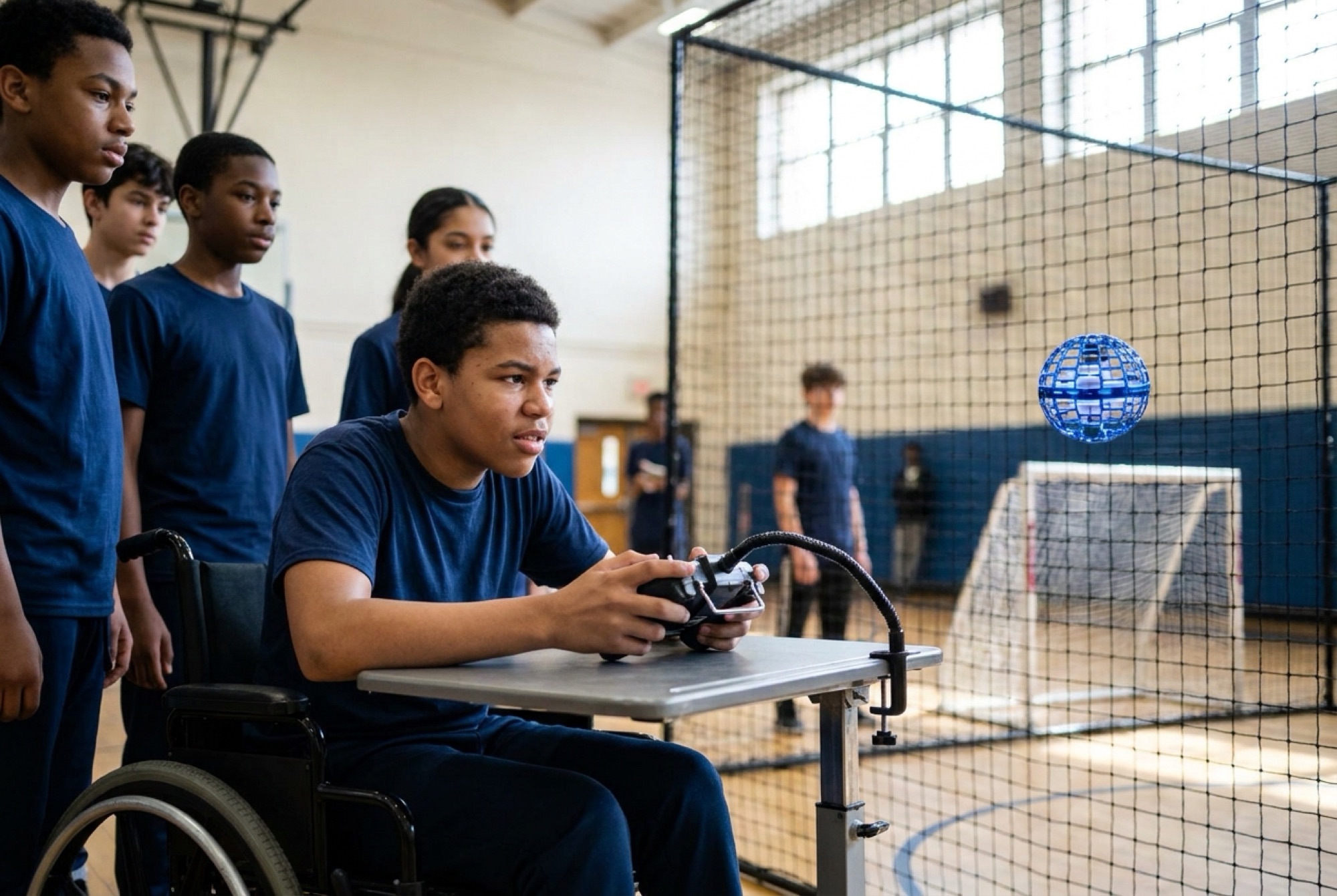
A student who uses a wheelchair flying a drone from a height-adjustable pilot table

Barrier in traditional sports: Can't run the court

Only the drone moves.

The pilot station is seated, so a wheelchair user has the same controls as a standing teammate. Steady hands and a precise hover make a very good goalie.

What SCADA adds

Height-adjustable ADA tables, joystick and tray mounts, and sip-and-puff compatible controls.

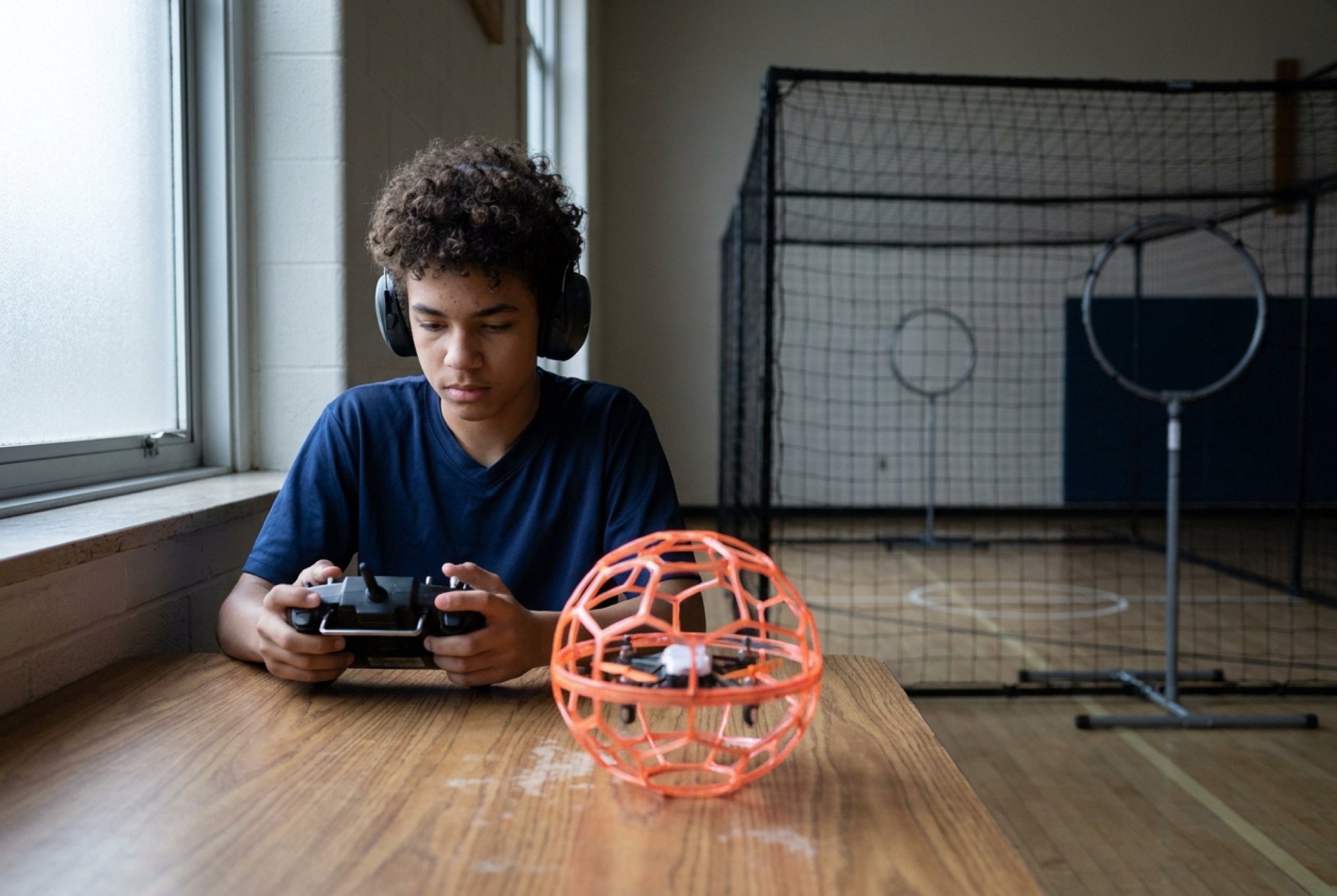
A student wearing headphones concentrating on a drone controller in a calm corner of the gym

Barrier in traditional sports: Sensory overload

Caged, structured, predictable.

A match happens inside a net, on a posted schedule, with clear signals. Students with autism or ADHD get high focus without the noise of a basketball gym.

What SCADA adds

A quiet corner and noise-cancelling headsets, available to anyone who wants them.

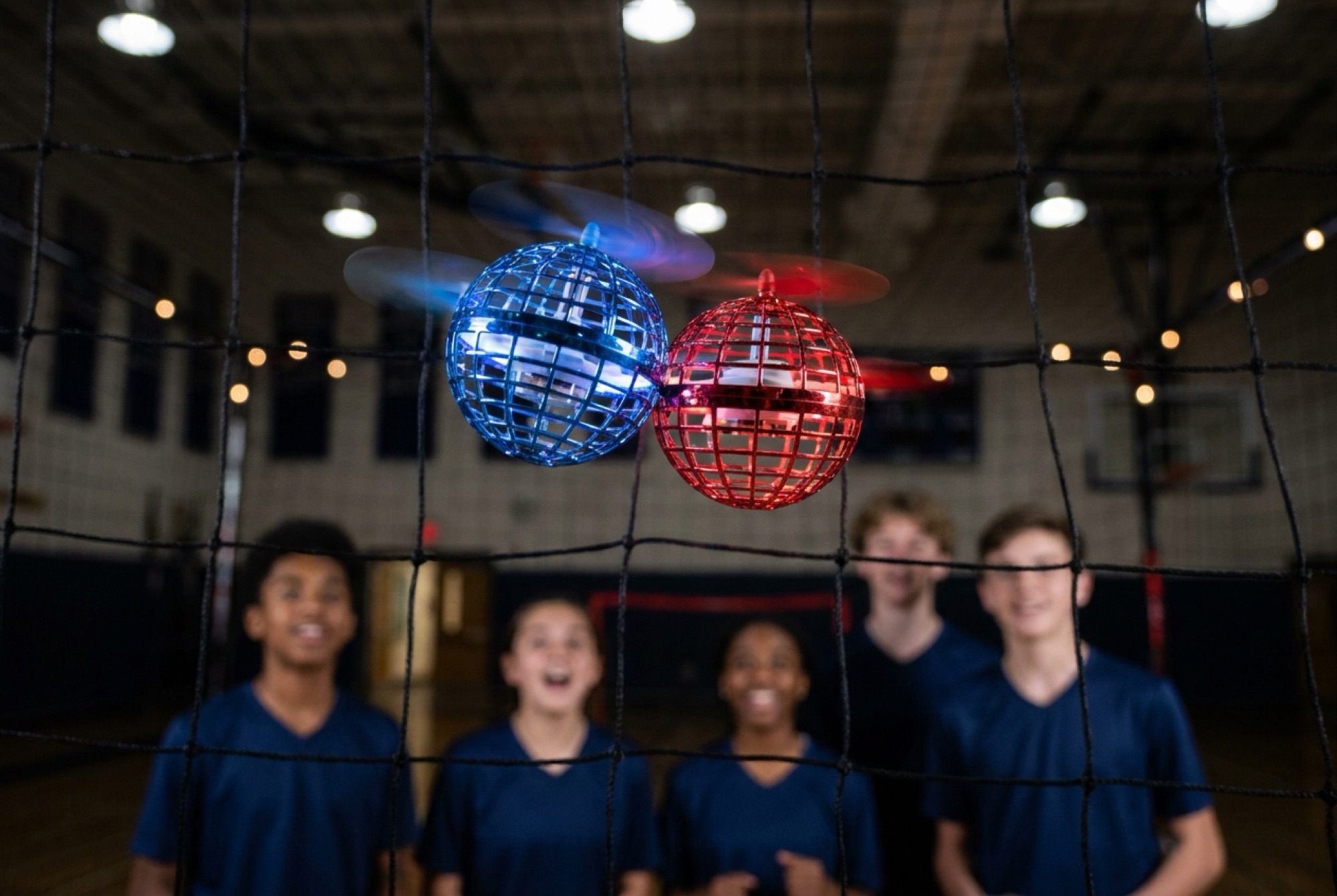
Two caged drones glowing red and blue meeting in mid-air inside the arena net

Barrier in traditional sports: Contact injuries

Zero contact.

It is drone against drone inside a net, never person against person. Nobody runs and nobody gets tackled.

What SCADA adds

Same jersey, same team. Every pilot plays on one roster, never in a separate adaptive bracket.

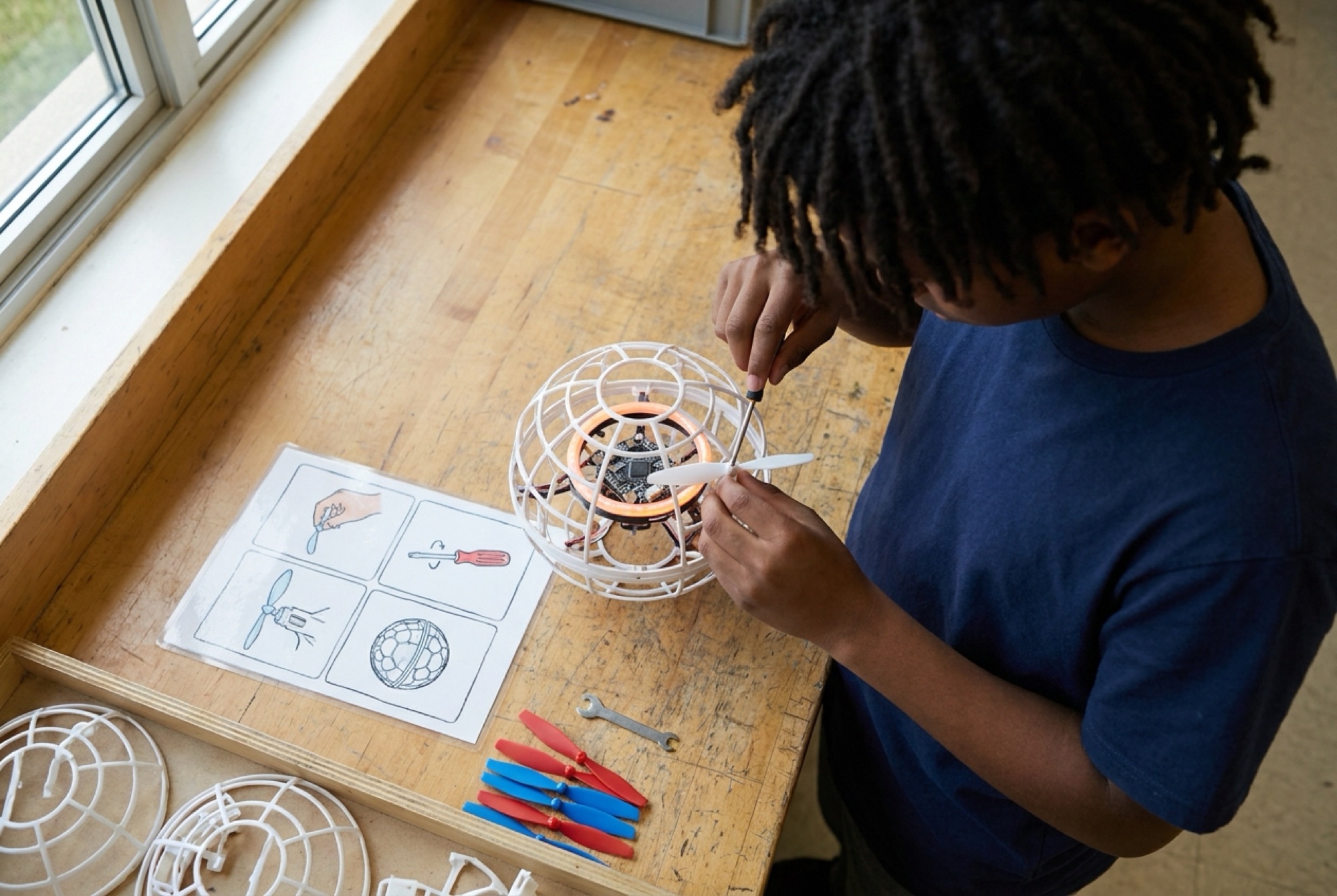
A student replacing a propeller next to a picture checklist

Barrier in traditional sports: Reading-heavy manuals

Learn by doing.

Students build and repair with their hands first. When we made picture-based repair guides for students with learning disabilities, every student started repairing faster.

What SCADA adds

A picture-based playbook, plus video lessons in ASL with English captions.

In drone soccer, the disability disappears and the ability appears.

Pilots build the drone before they fly it.

Drone soccer comes with a full science and engineering component. Students build, program and repair their drones as a team before they enter a tournament.

Drones crash. The first crash is the first repair, and that repair is where a lot of engineers start.

In every learner kit

  • A disassembled 20 cm drone soccer ball
  • Radio controller and receiver
  • Three 650 mAh LiPo batteries
  • Fire-proof battery storage bag
  • Drone soccer toolkit and safety glasses
  • Spare exoskeleton frames and propellers
Drawing of a 20 cm drone soccer ball A quadcopter inside a spherical protective shell, with its shell, propellers, motors, flight controller and battery labelled. Protective shell20 cm exoskeleton, replaceable pieces PropellersGemfan, swapped by the pilot Brushless motorsXING 1404, 3800 KV, plug and play Flight controller and receiverTuned and bound by the team LiPo batteryTattu R-Line 650 mAh, 4S, XT30 Ø 20 cm
The drone soccer ball, as students assemble it in week one.
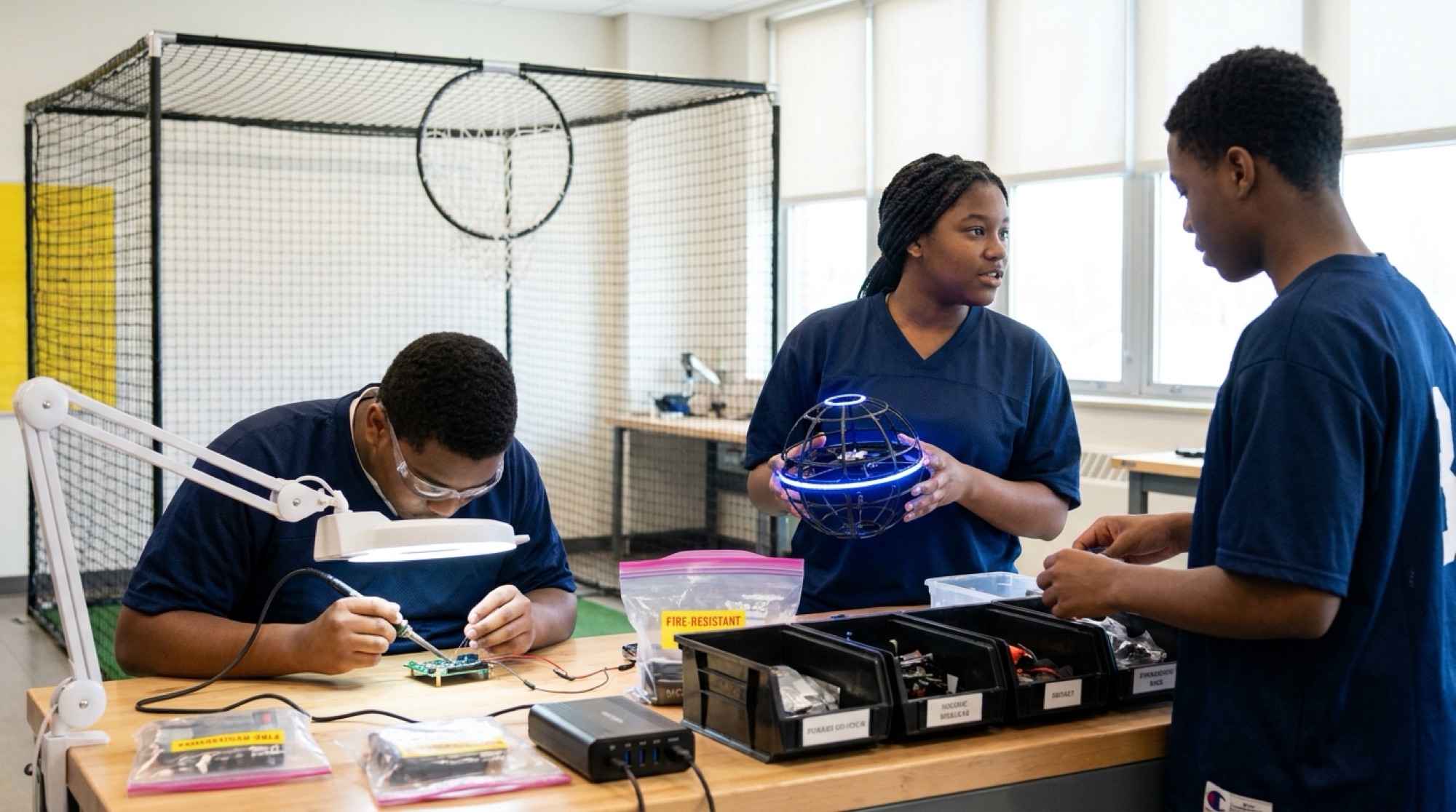
Students soldering and assembling drones together at a repair station
The repair bench: soldering, assembly and spare parts, run by the team.
Student pilots lined up outside the netted arena during a match
Pilots fly from outside the cage, standing or seated.

One rule decides every roster.

Seven students make a team: five active pilots and two alternates. All seven rotate through every position, and no one is benched. This is a sample roster. Rotate it and the rule still holds.

The SCADA Inclusion Rule

  • At least one active pilot who is Deaf, Hard of Hearing or has a disability
  • At least one girl among the five
  • No more than three mainstream learners without a disability

Built on Universal Design for Learning: we design each lesson for the student with the greatest need, and every student learns better for it.

One curriculum, taught to everyone at once.

Mainstream and adaptive learners take the same lesson at the same time. Every session follows a visual schedule posted on the wall and on the TV.

A session

  1. Visual check-inA Deaf student leads the ASL word of the day.
  2. Flight skillsOne skill, shown in ASL, spoken English and video.
  3. Team scrimmageGreen light for go, red light for stop. Deaf referees use flags.
  4. Repair and STEMPicture checklists at the bench.
  5. ReflectionThumbs up, middle and down cards.

A season

  1. Foundations Safety, battery handling and essential ASL signs.
  2. Team play Striker, wing, goalie and technician rotation. Strategy from visual play cards: attack, defend, swap.
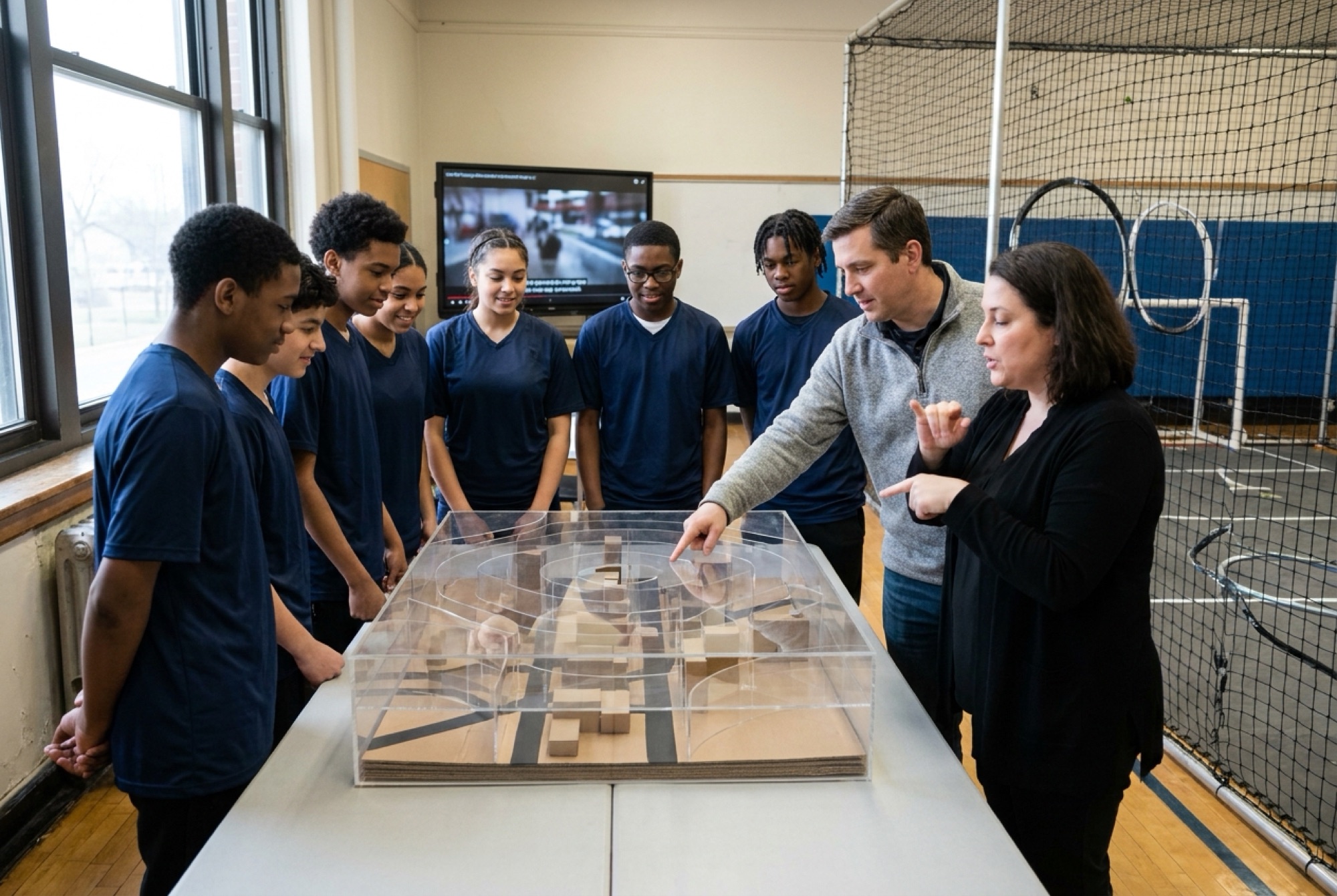
  3. Career and showcase FAA TRUST certification with captions and ASL, an introduction to Part 107 airspace using 3D models, and the Unified Airspace Open tournament.
Students studying a 3D airspace model with an instructor and an ASL interpreter
Airspace, taught with a model you can walk around.
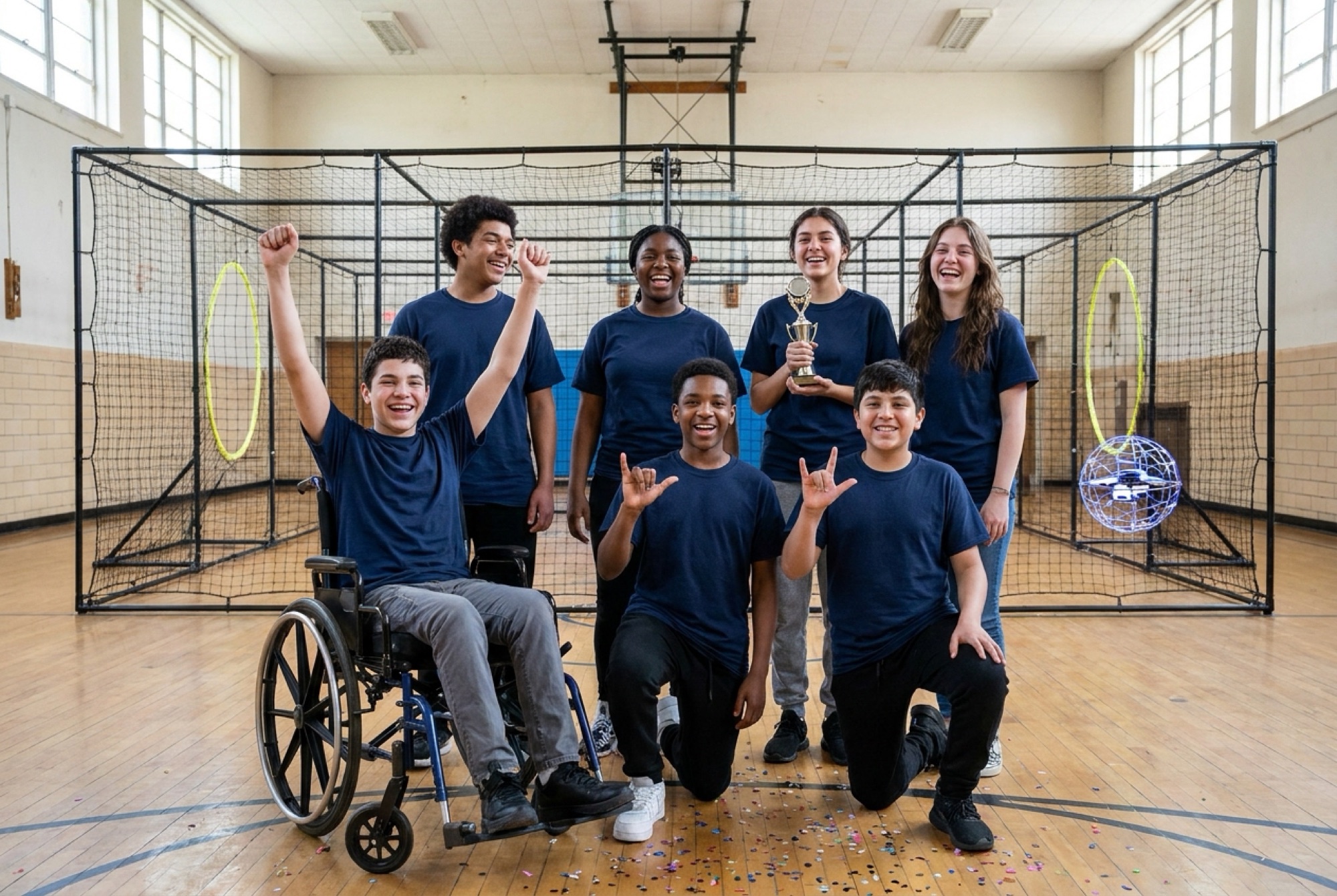
A unified team in matching jerseys celebrating with a trophy
One team, one trophy.
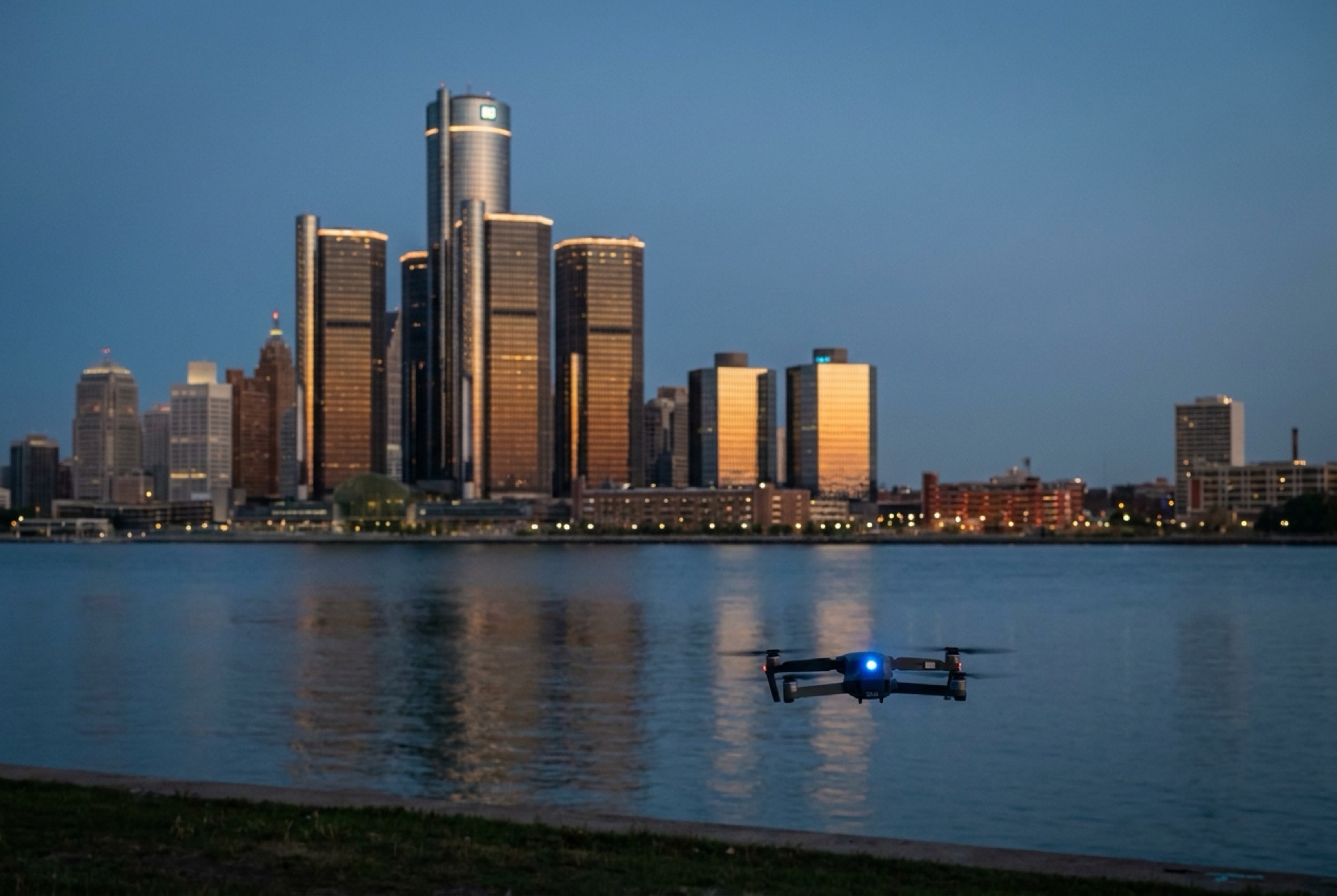
A city skyline at dusk with a drone over the river
Every city can be a flight city.

From a school gym to the world stage.

Drone soccer needs very little room. With a net and goal markers it fits in a school gym or even a classroom, so a team can start almost anywhere. The equipment is bought once and works for every pilot on the roster.

Where a team can start

  • In the classroom
  • As an after-school club
  • At a weekend or summer camp
  • In pre-college programs
  • Through community outreach
  • From one parent-led team to a district-wide league

What pilots work toward

  • An FAA TRUST certificate
  • An introduction to Part 107 airspace, with ADA accommodations for the exam
  • Hands-on skills in building, programming and repairing drones
  • Basic ASL, learned alongside Deaf teammates
  • A path toward careers in aviation, engineering and robotics

How pilots move up

  1. School teamA unified team forms at a local school or community center.
  2. Inter-schoolTeams meet in inter-school tournaments and unified showcases.
  3. Across MichiganThe league grows to middle schools, colleges and schools for students with disabilities.
  4. NationalsInter-school winners are selected for the national competition.
  5. The worldNational winners represent the USA in international drone soccer.

Join us in shaping the future.

Tell us who you are and what you have in mind. Schools that want a team, families with a young pilot, funders and employers: we'll get back to you with next steps and the full program plan.

Rev. Henry Darko Sapeh Executive Director henry@scadadrone.com
Nii Ako Operations Director nii@scadadrone.com
I'm interested in

Enter your name.

Enter an email address like name@school.org.

Add a short message so we know how to help.